For those that we’re able to catch our live show yesterday, here it is in all its glory! It will be available at some point as just the audio download. But for now, you can watch us on YouTube! Not sure why nothing is showing up besides the direct link, but it still works! Click and enjoy!
In two days, at 8pm (CST), we will be celebrating our 50th episode by doing a LIVE show! The best part is that there will be a chat room, so you are welcome to ask questions, make comments, and maybe even count how many times Jon swears, or has technical difficulties, which then usually leads to more swearing!
Your Hosts: Jon Kitley – Damien Glonek – Aaron AuBuchon
The plan is to go live at 8pm, and we’ll have a few subjects that we’ll be covering, but the main point of this is to hear from our fans. If you have suggestions for a possible topic, let’s hear it! If there is a particular episode that you really enjoyed, let us know! If there was a movie you watched because of one of our episodes and really enjoyed it, let’s hear it!
All you do is click on the link below at 8pm and it will take you to YouTube channel where you’ll be able to see us during the chat. Hope to hear from you and hear your thoughts and suggestions.
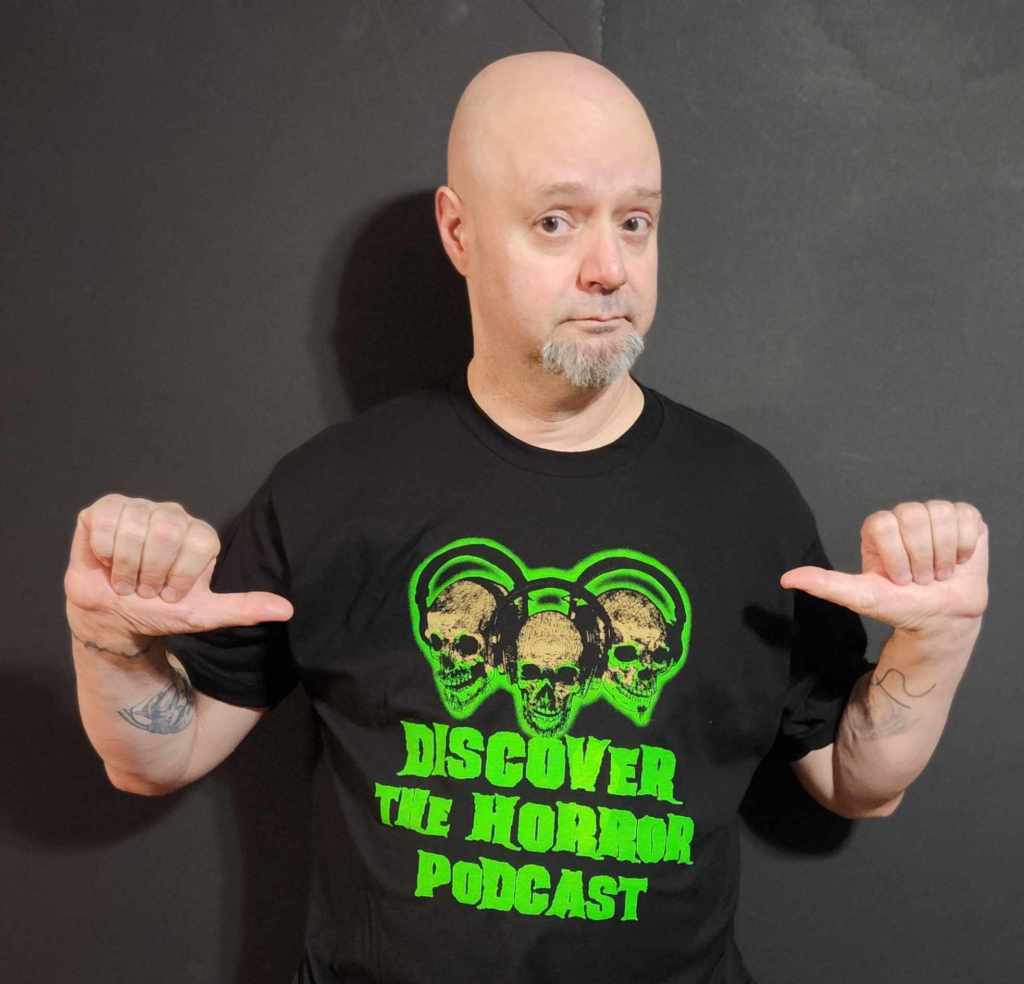
We now have our own Discover the Horror T-Shirts available that have our logo in bright green just jumping off the shirt! Show your support of the show by ordering yours today! All the ordering information can be found at the link at the top left of the screen, on the main link bar. A huge thanks out to our friends at Pallbearer Press for helping to bring these to life!
Just click on link above where it says “DTH SHIRTS” to order your own shirt to give your support for the show.
One of the things that was realized at some point after the creation of Famous Monsters magazine, was that there was this horror fandom, or fan base, of all these horror fans around the country, in a variety of ages, that realized that they were not alone in their love of horror. While there were more magazines to follow, at some point there was the birth of the fanzine, which was the low budget version of a professional magazine, but one that was created by nothing but passion. In the ’90s, with home computers and then desktop publishing became something you had in your own home, more and more of these fanzines started. Each one wrote about the films they wanted to cover, whether it was mainstream, though mainly they were talking about more on the obscure side, but it was always through the excitement of hoping to get others to seek those films out.
In this episode, we welcome Dave Kosanke, creator and genius behind the fanzine Liquid Cheese, which Dave created, wrote, and self-published for 25 years. Dave’s knowledge of the horror genre and fanzines is a topic that he is more than well-versed in, which it shows within the first few minutes of chatting with him.
Night of the Eagle aka Burn, Witch, Burn (1962), Eyes of Fire (1983), Pyewacket (2017)
Welcome to Episode 48, where we are about to discuss one of the oldest perceived monsters in our history . . . witches. But as we know in film, there are many different types of witches, therefore a lot of different types of witch movies. Some titles the craft is done for good, while there are others to use it for more of a darker side, maybe for a personal gain. And then there are those that are just plan evil.
Either way, this is a genre monster that not only is one of the oldest ones, it also has crossed into many other genres, from romance to comedies. But it doesn’t take away the power behind the sub-genre. So, sit down and make sure you have your favorite lucky charm with you, light a candle, or whatever you need to do for protection, as we delve into 3 different titles.
House on Haunted Hill (1959), The Tingler (1959), and Mr. Sardonicus (1961). In the world of ballyhoo, nobody comes close to being a master at it than producer/director William Castle. From giving insurance policies to filmgoers in case they die of fright, promising the horrors onscreen will come off the screen into the audiences, to even letting the audience decide the fate of one of the characters in the film, Castle was a master of it. He treated his fans with respect and wanted everyone to have a great time with his pictures. And they still are entertaining today.
In this episode we’re going to delve into 3 of Castle’s films, as well as the man himself. Joining us to talk all things Castle is superfan and collector (not to mention Regional Warrior for Severin Films) Matt Harding!
Horror movies and heavy metal music have almost gone hand in hand, since the real first heavy metal band, Black Sabbath- which was even named after a horror film! Horror films were a huge influence on the metal genre, from imagery on the album covers, to the lyrics, and even the sound and style of the music itself. And they continue to do so to this day.
To delve a little deeper into the connection between those two, we invited two members of Incantation, one of the oldest death metal bands out there, Kyle Severn and Chuck Sherwood. So, join us as we talk music, metal, and movies!
Corpse Mania (1981), Red Spell Spells Red (1983), The Rape After (1984)
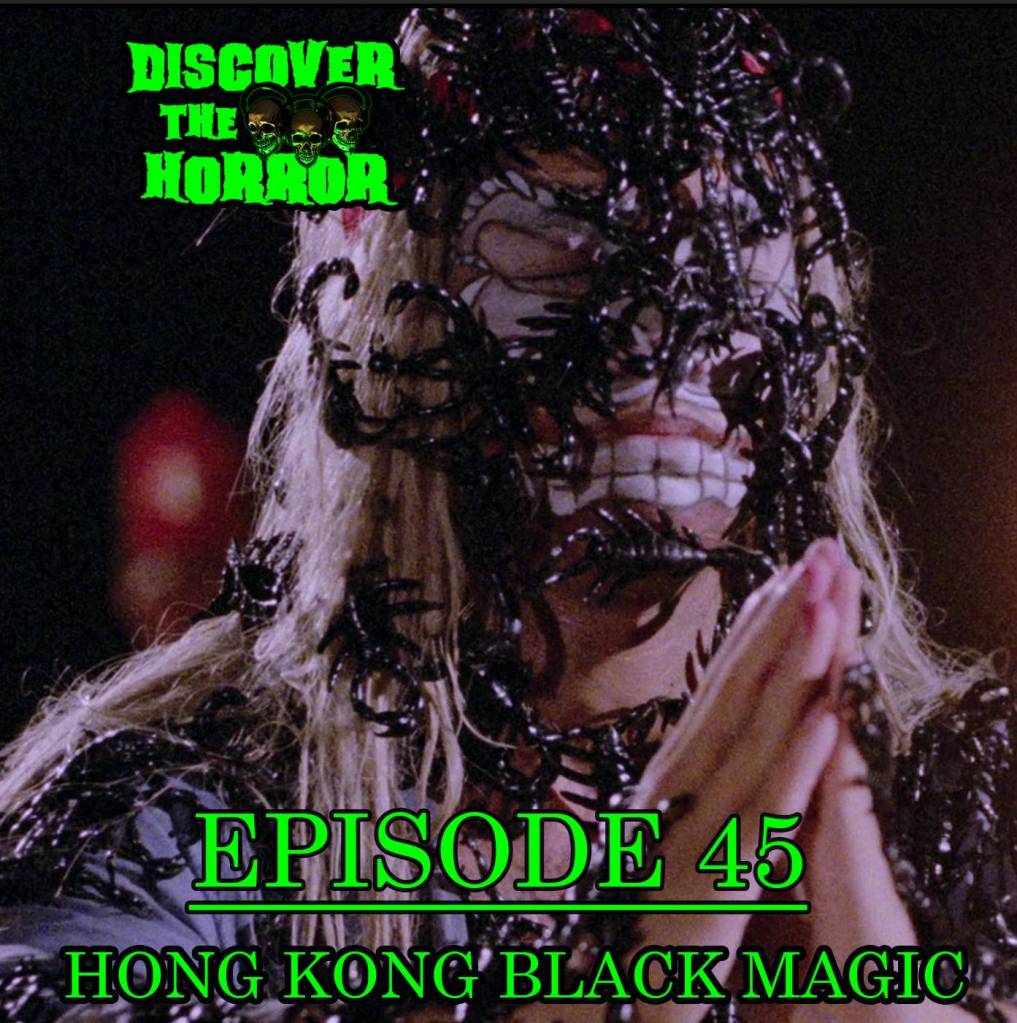
Obviously, the title of our show, and its mission statement is about discovering new horror, In the past we’ve always brought films to the table that we already liked and wanted to discuss. But on this episode, we were given a unique opportunity. We were given a list of somewhat obscure Hong Kong-created black magic horror films which contained titles that none of us had seen, and it gave us an idea: maybe this time Aaron, Damien and Jon would be the ones who discover the horror! We each picked a film we’d never seen but sounded interesting, and on episode 45, we share our thoughts on these very unique films.
If you’ve not spent time in the utterly unhinged world of Hong Kong black magic horror, and are fond of the surreal, the impossible and the inexplicable, we think this show might just be for you. Scorpion attacks, maggoty necrophilia, rats leaping from the mouths of dead fathers… this episode has it all.
To join us, we invited Ryan Smith, who made the list and has gathered probably the largest collection of Hong Kong cinema that we’ve ever heard of. Be careful- this is one where leaves can rip your face off!
El Vampiro (1957), The Black Pit of Dr. M (1959), and The Curse of the Crying Woman (1963). Any horror fan worth their weight in blood knows their fair share about the classic monster films from Universal from the 30s and 40s before they died a slow death. But do you know that in the late 50s and early 60s, there was a bunch of classical looking horror films made in Mexico? Looking a lot like their Universal brethren, these Mexican films cranked up the atmosphere (and the fog machines) to 11, using some of the traditional monsters, as well as developing some from their own heritage.
Mexican horror films from this era don’t seem to get the credit and notoriety that they should. We’re hoping to help change that by covering 3 that we think are pretty damn good. So, buckle up, get your pen and notepad ready and get ready to start down a very foggy path into a highly underrated sub-genre.
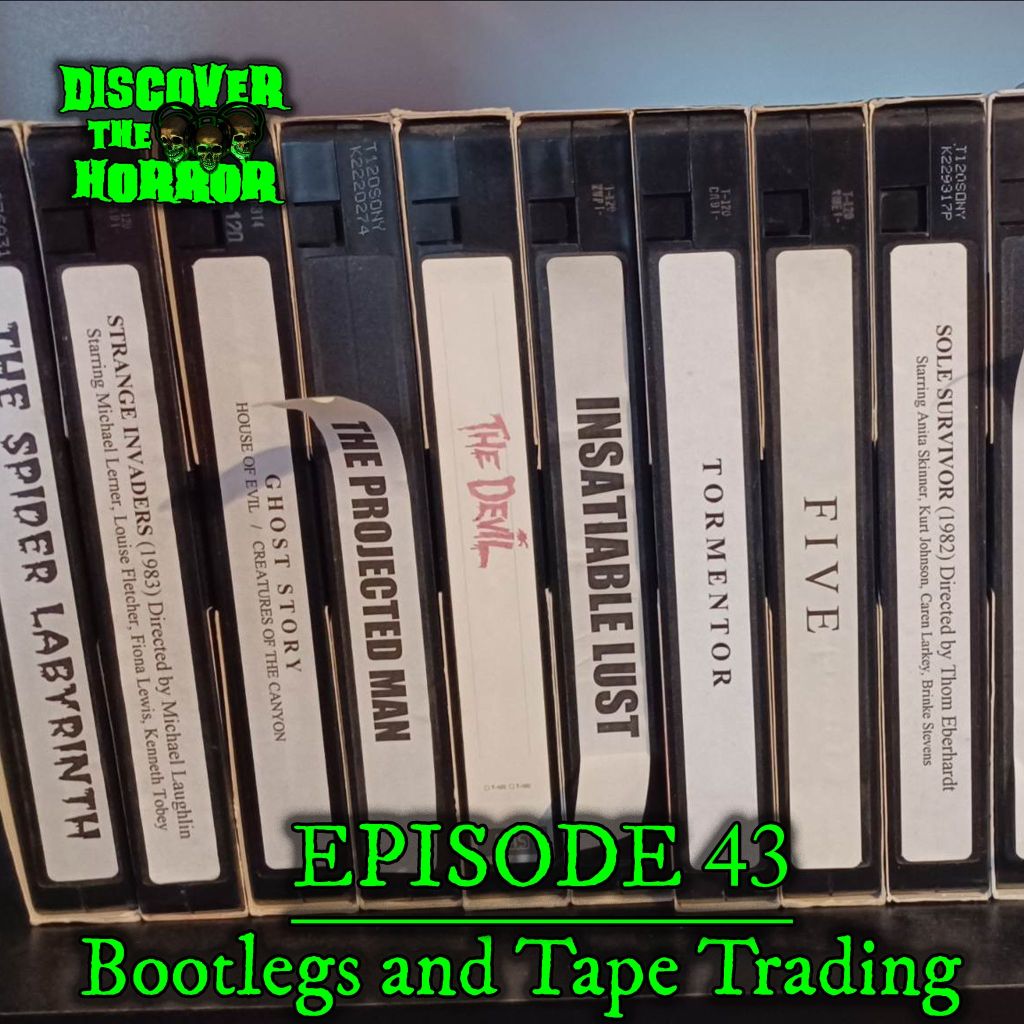
Back in ancient times, before Netflix and Amazon Prime, before Hulu and YouTube, even before DVDs and Blu-rays, if films weren’t available to you from either your local video stores, or if you wanted to see an uncut print of a movie, or even one that wasn’t released on VHS, the place you could find them would be in fuzzy gray market of the bootlegs.
These types of vendors were a staple to a lot of the early movie conventions, where fans could find titles that never even knew were out there. Some of us are old enough to remember being able to finally see the uncut full letterboxed version of Lucio Fulci’s The Beyond, after years of suffering though only being able to see the heavily edited Seven Doors of Death.
As your collection grew, you would usually start trading with others, increasing your collection even more, as well as helping to spread the love and passion of these amazing films. This is what we’re discussing in this episode, so sit back and either reminisce with us, or learn about the good old days, when we were happy for a 5th generation grainy print of Anthropophagus that had the infamous fetus scene!





 discoverthehorror.com